

What Leaders Can Learn from Taylor Swift’s Eras Tour Part 3: Sustainable Leadership & Knowing When a Season Ends
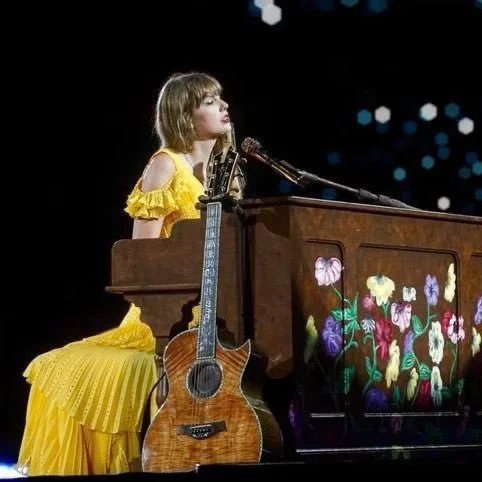
Across this series, we’ve explored what the Eras Tour reveals about leadership, culture and employer brand, from the invisible work that builds trust, to the small human moments that shape how people feel, and the alignment that turns culture into competitive advantage.
But there is one final lesson that may be the most important for founders and CEOs of all:
Great leadership is not just about performance. It’s about sustainability.
1. Fitness is leadership preparation
One of the details that stayed with me from the documentary is that Taylor began physically training for the Eras Tour six months before it started.
Not to look good on stage. But because she understood the physical and emotional endurance required to lead a three hour performance, multiple nights a week, for over a year.
That’s leadership.
She didn’t wait until she was exhausted to respond, she conditioned herself in advance for the reality of the work.
But it didn’t stop there.
She also structured the tour itself with sustainability in mind:
carefully paced performance weeks
deliberate rest breaks
meaningful time off between tour legs
and clear post show rituals to unwind and regulate her nervous system
This wasn’t accidental. It was intentional.
For founders and leaders, the message is simple but confronting:
Your energy is not infinite.
Your nervous system is not a machine.
Your health is not separate from your business performance.
If you are not building fitness (physical, emotional and mental) into your leadership plan, you are running on borrowed time.
2. The Vancouver moment: vulnerability, professionalism & boundaries
Throughout the tour, Taylor makes something very clear: when she is on stage, she is on stage.
No matter what is happening behind the scenes, breakups, personal struggles, global events, safety concerns, or the weight of carrying a massive operation, she becomes the performer her audience has come to see.
She protects the container of the show.
That’s why the Vancouver moment is so powerful.
After her acoustic set, she becomes overwhelmed. She struggles to speak. She breaks - in front of everyone.
She finishes the show. She holds the space for the audience.
Then she steps off stage and processes the moment privately with the people she trusts.
And when she comes off, she is embarrassed. She feels she’s been unprofessional. She worries she’s lost control of the performance.
It’s her brother who reframes it for her:
That was the most meaningful moment of the whole night.
This is leadership maturity in real time. Not emotional suppression. Not emotional collapse.
Vulnerability with boundaries.
Strength is not pretending you feel nothing. Strength is knowing when to contain, when to release, and where each belongs.
3. “Proud… but so ready” - knowing when a season ends
When asked how she feels as the Eras Tour comes to a close, Taylor says:
“I feel really proud… but so ready.”
That one sentence holds enormous leadership wisdom.
Just because something is:
successful
exciting
externally celebrated
doesn’t mean it has to last forever.
Some seasons are meant to be lived fully, and then lovingly closed.
For founders, this shows up everywhere:
stepping away from the day-to-day and letting others lead
releasing roles, projects or structures that no longer serve the next phase
having the courage to acknowledge when a team member’s season in the business has come to an end
or recognising that your own season in a particular chapter of leadership is complete
Growth is not endless holding on. Leadership is knowing when to move forward.
Time is a non-renewable resource. Choosing how you spend it is one of the most important leadership decisions you will ever make.
What this means for founders & leaders
The Eras Tour is not just a story of extraordinary performance.
It is a blueprint for how sustainable leadership actually works in the real world.
It shows us that leadership is not built in the spotlight, it is built in the preparation, the boundaries, the choices we make when no one is watching, and the courage to evolve when a season is complete.
For founders and CEOs, this matters because if you do not actively design for sustainability, your business will eventually demand it from you anyway.
The leaders who build something that lasts are not the ones who sacrifice everything. They are the ones who understand what must be protected.
The series, in three truths
As this series closes, here are the lessons the Eras Tour leaves us with:
From Part 1 - Leadership & Culture
Extraordinary teams are built through safety, belonging, language, and the invisible work of preparation.
People do their best work when they feel seen, supported and trusted.
From Part 2 - Employer Brand & Alignment
Your external brand is only as strong as your internal reality.
Culture is created in the small, human moments and your people will always become your reputation.
From Part 3 - Sustainable Leadership & Seasons
Energy is a strategic asset.
Boundaries are leadership.
And knowing when a chapter has done its work is not failure, it is wisdom.
The real leadership lesson
You don’t need a global tour to lead like this.
You need intention.
You need self-awareness.
And you need the courage to believe that how you lead people is the strategy.
Because the businesses that endure are not the loudest, the fastest, or the most exhausting, they are the ones built by leaders who understand what truly matters, and protect it.