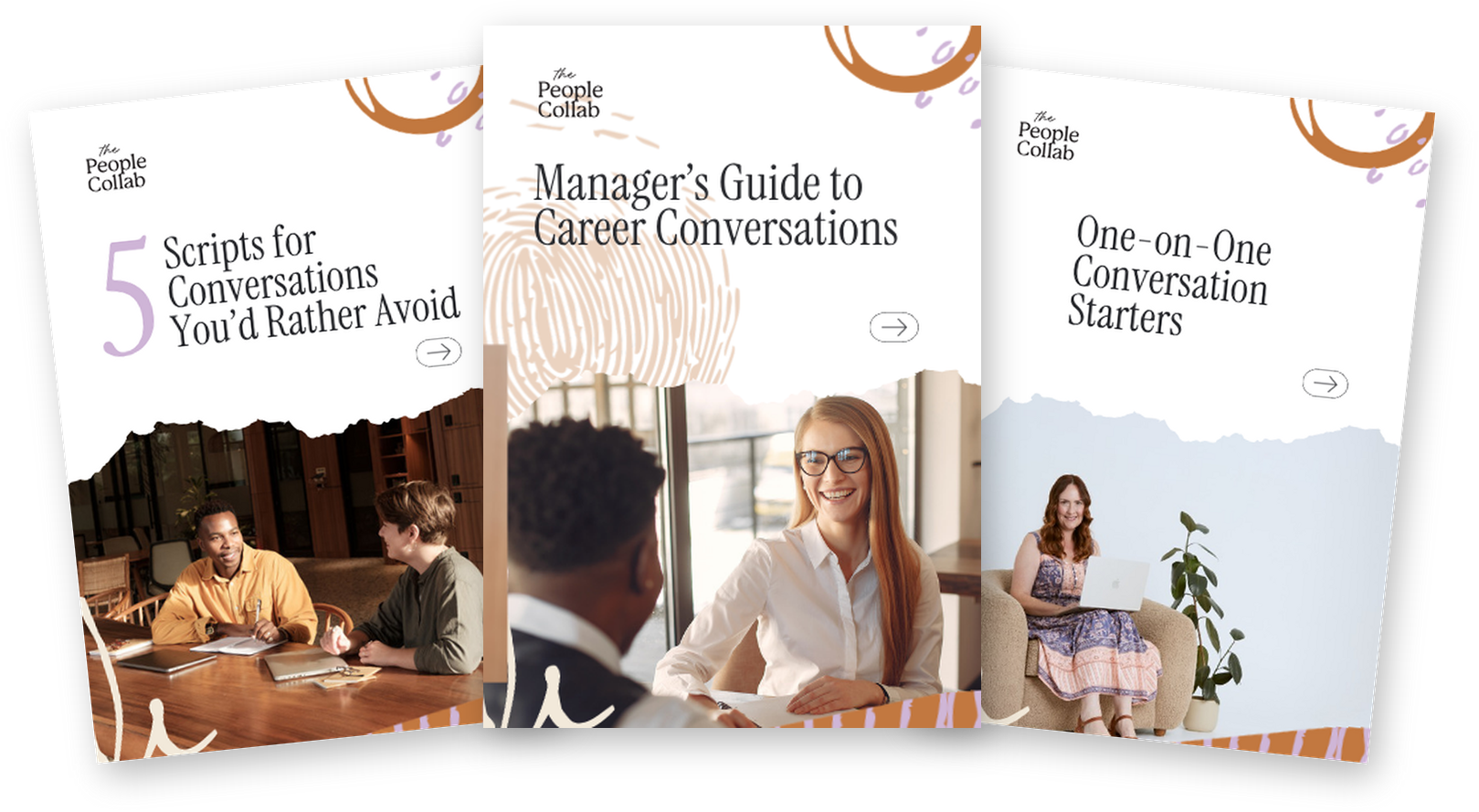
Career conversations are one of the most powerful tools a manager has. They’re also the ones most managers put off, because they worry about saying the wrong thing, promising too much, or not having the answers.
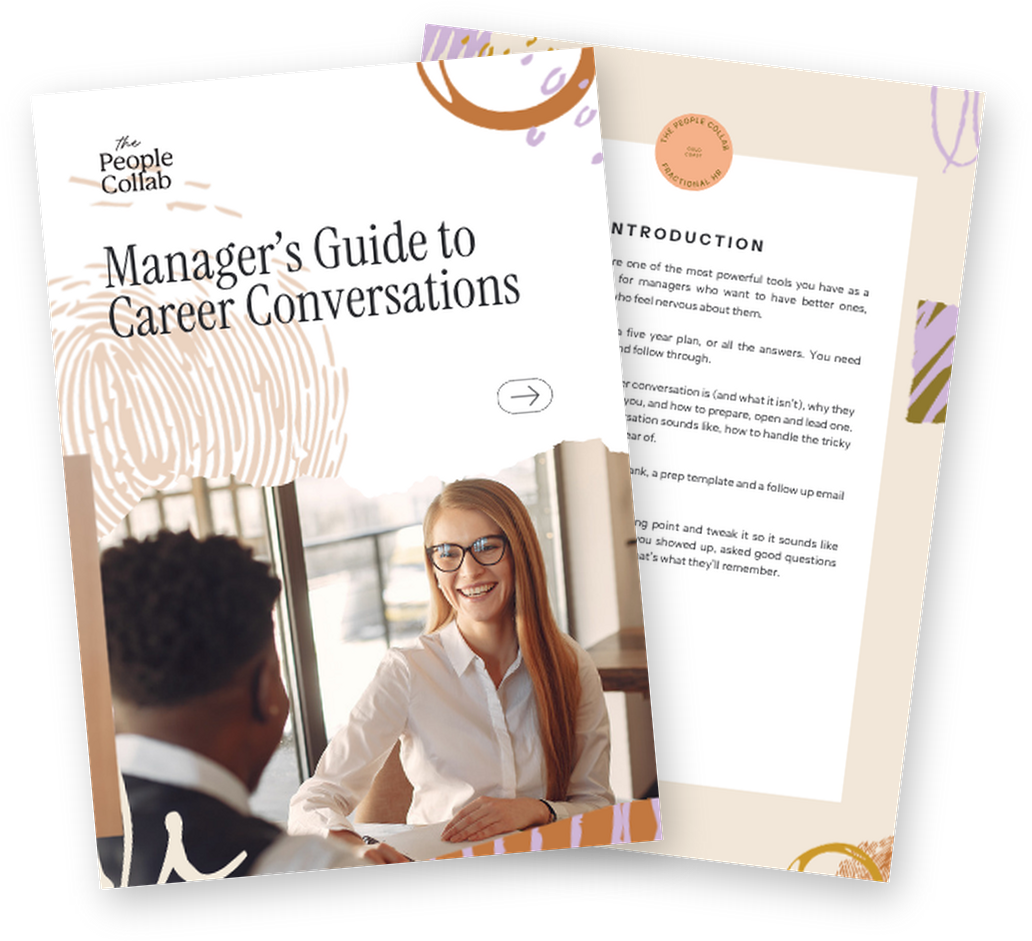
This guide is for managers who want to have better career conversations with their team, including the ones who feel nervous about them. You don’t need a script, a five year plan or all the answers. You need curiosity, good questions and follow through, and this guide gives you all three.
Written by Emma Miller, an Australian HR consultant with over 20 years of senior HR leadership experience, it’s practical, plain-English guidance you can use this week.
Inside you’ll find:
What a career conversation is (and isn’t), and why it matters for retention and engagement
The most common manager worries, with honest reframes
Extra support for new managers running their first one
A simple three-phase approach: prepare, listen and explore, agree actions
Two ready-to-use openers to take the pressure off
Four real example conversations showing what good sounds like, with the manager’s moves explained
What to do when it gets tricky, and the habits to avoid
Tips for remote and hybrid teams
A career conversation question bank
A one-page prep template
A follow-up email template
Who it’s for: founders, business owners, team leaders and new managers in growing businesses. Use it yourself, or hand it to your managers so career conversations happen consistently across your team.
Format: a 20-page PDF guide, downloaded instantly after purchase. It works on your computer, tablet or phone, and you can print it.
Questions
Is this specific to Australian workplaces?
It’s written by an Australian HR consultant and suits Australian businesses, but the guidance works for managers anywhere.
Can I share it with my managers?
Yes, you can share it with managers within your own business.
Will this help with performance reviews?
It’s designed for career and development conversations, which work best kept separate from performance reviews. The guide explains why and how.